
Cloud Computing: Transforming the Digital Landscape
In the digital world, cloud computing has emerged as one of the most transformative technologies of the 21st century. It has fundamentally changed how individuals, businesses, and governments store, process, and manage data. Rather than relying solely on local servers or personal computers, cloud computing enables users to access computing resources and data on-demand over the internet.
This paradigm shift from physical infrastructure to virtualized, on-demand services has fueled innovations across industries, from healthcare and finance to education and entertainment. With its scalability, cost efficiency, and flexibility, cloud computing underpins many modern technologies, including artificial intelligence (AI), the Internet of Things (IoT), and big data analytics.
This feature explores the concept, architecture, deployment models, advantages, challenges, security concerns, and future prospects of cloud computing, emphasizing its crucial role in shaping the digital future.
Understanding Cloud Computing
Cloud computing refers to the delivery of computing services—such as servers, storage, databases, networking, software, and analytics—over the Internet (“the cloud”) to offer faster innovation, flexible resources, and economies of scale.
According to the National Institute of Standards and Technology (NIST), cloud computing is a model for enabling ubiquitous, convenient, on-demand network access to a shared pool of configurable computing resources that can be rapidly provisioned and released with minimal management effort or service provider interaction.”
History of Cloud Computing
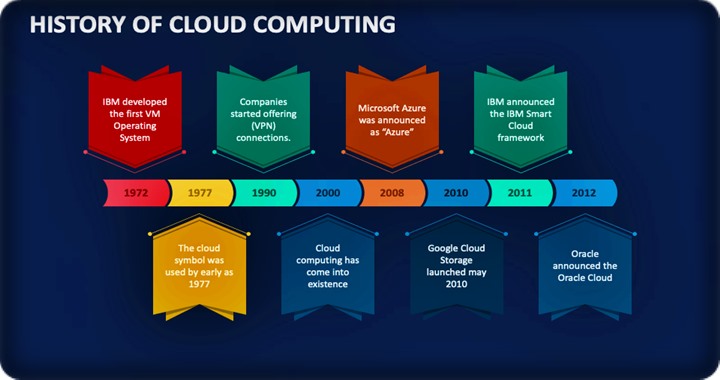
Cloud computing didn’t appear overnight—it evolved over decades as computing itself changed. Here’s a clear, chronological look at how it developed:
Early Concepts (1950s–1970s)
- In the 1950s and 60s, large mainframe computers were extremely expensive and centralized.
- To maximize usage, researchers developed time-sharing, allowing multiple users to access one computer simultaneously.
- The idea of computing as a utility (like electricity) began to emerge.
- The creation of ARPANET in 1969 laid the foundation for networked computing.
Networking & Virtualization (1980s–1990s)
- The rise of the internet enabled computers to connect globally.
- Client-server architecture became standard.
- Virtualization technology allowed one physical machine to run multiple virtual systems.
- Companies began offering shared infrastructure—early hints of cloud services.
Birth of Cloud Computing (Late 1990s–2000s)
- The term “cloud computing” gained popularity.
- In 1999, Salesforce delivered applications over the internet (Software as a Service, SaaS).
- In 2006, Amazon Web Services launched services like EC2, allowing businesses to rent computing power.
- Google and Microsoft soon followed with their own cloud platforms.
Expansion & Standardization (2010s)
- Cloud computing became mainstream.
- Three key service models emerged:
- SaaS (software delivered online)
- PaaS (platform for developers)
- IaaS (infrastructure services)
- Businesses adopted public, private, and hybrid clouds.
- Mobile apps, big data, and streaming services relied heavily on cloud infrastructure.
Modern Cloud Era (2020s–Present)
- Cloud now powers AI, machine learning, and IoT.
- Trends include:
- Serverless computing (no need to manage servers)
- Edge computing (processing closer to users/devices)
- Multi-cloud strategies
- Major providers dominate:
- Amazon Web Services
- Microsoft Azure
- Google Cloud
Cloud computing evolved from-
shared mainframes → networked systems → virtualized infrastructure → on-demand internet services → intelligent, distributed cloud platforms.
The Concept of Virtualization
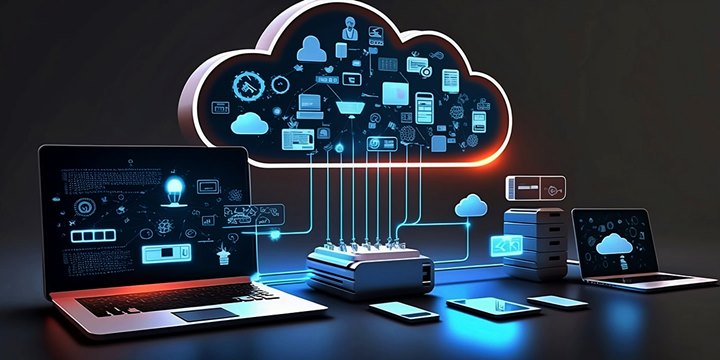
At the heart of cloud computing lies virtualization, a technology that allows multiple virtual machines (VMs) to run on a single physical machine. This improves hardware utilization and enables efficient resource allocation, forming the foundation of cloud services.
Characteristics of Cloud Computing
Cloud computing exhibits several defining characteristics:
- On-Demand Self-Service: Users can provision computing resources automatically without human intervention from service providers.
- Broad Network Access: Services are accessible through standard devices such as laptops, smartphones, and tablets via the Internet.
- Resource Pooling: Providers use multi-tenant models to serve multiple customers using shared physical and virtual resources.
- Rapid Elasticity: Resources can be scaled up or down dynamically according to user demand.
- Measured Service: Cloud systems automatically control and optimize resource use by metering capabilities — users pay only for what they consume.
Cloud Computing Architecture
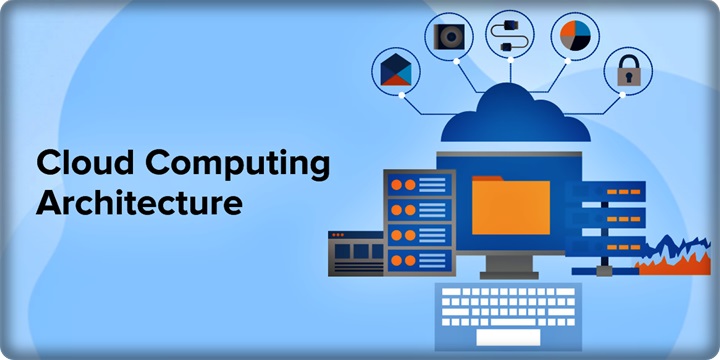
The architecture of cloud computing is divided into two main components: the front end and the back end.
- Front End: This includes the client devices and applications used to access the cloud (such as web browsers or mobile apps).
- Back End: This consists of servers, data storage systems, and virtualization software that deliver services through the Internet.
The interaction between these layers is managed by a cloud management system, which ensures smooth communication, security, and resource allocation.
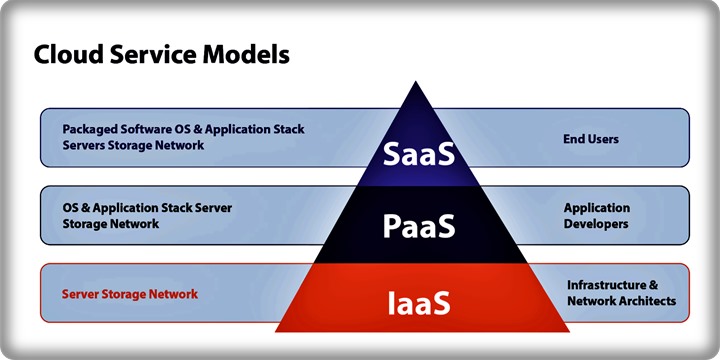
Cloud Service Models
Cloud computing is typically categorized into three primary service models, known as the “SPI” model:
Infrastructure as a Service (IaaS)
IaaS provides virtualized computing resources over the Internet. It includes servers, storage, and networking hardware. Users manage operating systems and applications while the provider manages the infrastructure.
Examples: Amazon Web Services (AWS), Microsoft Azure, Google Compute Engine.
Advantages:
- Full control over infrastructure.
- Scalability and flexibility.
- Reduced physical hardware costs.
Platform as a Service (PaaS)
PaaS offers hardware and software tools (usually for application development) over the internet. Developers can build, test, and deploy applications without managing the underlying infrastructure.
Examples: Google App Engine, Microsoft Azure App Service, Heroku.
Advantages:
- Simplifies development and deployment.
- Enables collaboration among teams.
- Reduces maintenance complexity.
Software as a Service (SaaS)
SaaS delivers ready-to-use applications via the Internet on a subscription basis. Users access software through a web browser without installing or maintaining it.
Examples: Google Workspace, Salesforce, Microsoft 365, Dropbox.
Advantages:
- Accessibility from any device.
- Automatic updates and maintenance.
- Predictable subscription costs.
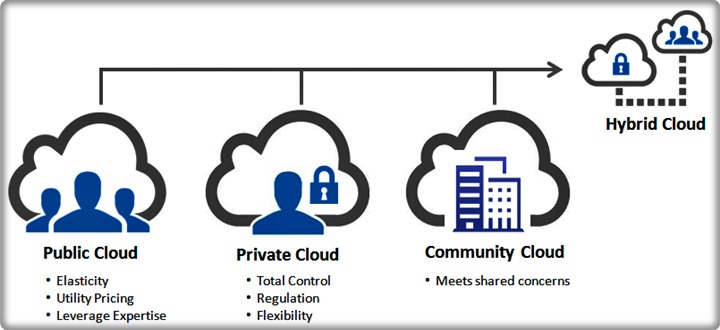
Deployment Models of Cloud Computing
There are four main deployment models, depending on how the infrastructure is managed and accessed.
Public Cloud
A public cloud is owned and operated by third-party providers who deliver computing resources over the Internet. It is available to the general public and follows a pay-per-use model.
Examples: AWS, Google Cloud Platform (GCP), Microsoft Azure.
Benefits:
- Cost-effective and scalable.
- No maintenance burden for users.
Challenges:
- Limited control over infrastructure.
- Security and privacy concerns.
Private Cloud
A private cloud is dedicated to a single organization and can be hosted internally or externally. It offers enhanced security and control.
Examples: VMware vCloud, OpenStack.
Benefits:
- High security and compliance.
- Greater customization.
Challenges:
- High setup and maintenance costs.
- Limited scalability compared to public clouds.
Hybrid Cloud
A hybrid cloud combines public and private clouds, allowing data and applications to move between them. This provides flexibility and optimization for different workloads.
Example: Using a private cloud for sensitive data and a public cloud for large-scale applications.
Benefits:
- Balances security and scalability.
- Enables cost efficiency and performance optimization.
Community Cloud
A community cloud is shared among organizations with similar requirements, such as security or compliance standards.
Example: Universities or government departments sharing infrastructure for research purposes.
Benefits:
- Shared costs among users.
- Tailored to specific needs.
Benefits of Cloud Computing
Cloud computing offers numerous advantages to individuals and organizations alike.
Cost Efficiency
Users avoid capital expenditure on hardware and pay only for the resources they use. This “pay-as-you-go” model converts fixed costs into variable costs.
Scalability and Flexibility
Resources can be scaled up or down instantly based on demand, ensuring optimal performance and efficiency.
Accessibility and Mobility
Data and applications can be accessed from anywhere with an Internet connection, promoting remote work and global collaboration.
Business Continuity and Disaster Recovery
Cloud providers offer automated backups and disaster recovery options, minimizing downtime and data loss.
Innovation and Speed
Cloud computing accelerates innovation by enabling rapid deployment of applications, integration of AI tools, and data analytics capabilities.
Challenges and Limitations of Cloud Computing
While cloud computing offers many advantages, it is not without challenges.
Security and Privacy Concerns
Data stored in the cloud is vulnerable to breaches, unauthorized access, and cyberattacks. Protecting sensitive information remains a major concern.
Downtime and Reliability Issues
Cloud services rely on Internet connectivity; any network failure or service outage can disrupt access.
Compliance and Legal Challenges
Different countries have varying data protection laws. Organizations must ensure compliance with regulations like GDPR (General Data Protection Regulation).
Vendor Lock-In
Migrating from one cloud provider to another can be complex due to differences in APIs, data formats, and pricing models.
Limited Control
Users depend on cloud providers for infrastructure management, updates, and policies, reducing operational control.
Cloud Security: Risks and Solutions
Major Security Risks
- Data Breaches: Unauthorized access to sensitive data.
- Insider Threats: Malicious actions by employees or partners.
- Insecure APIs: Vulnerabilities in application interfaces.
- Denial-of-Service (DoS) Attacks: Overloading servers to disrupt services.
- Data Loss: Accidental deletion or corruption of data.
Security Measures
- Encryption: Encrypting data during transmission and storage.
- Identity and Access Management (IAM): Ensuring only authorized users access data.
- Regular Audits: Monitoring and assessing cloud environments for vulnerabilities.
- Backup and Recovery Plans: Ensuring business continuity during disasters.
- Shared Responsibility Model: Both cloud providers and users share responsibility for security management.
Cloud Computing and Emerging Technologies
Cloud computing is deeply integrated with other cutting-edge technologies:
Artificial Intelligence (AI) and Machine Learning (ML)
Cloud platforms provide AI and ML tools (e.g., AWS SageMaker, Google AI Platform) that help organizations analyze big data, automate processes, and gain insights.
Internet of Things (IoT)
IoT devices generate massive data volumes, which are processed and analyzed using cloud-based storage and computing systems.
Big Data Analytics
Cloud computing provides the computational power required for processing and analyzing large data sets in real time.
Edge Computing
Edge computing complements the cloud by bringing data processing closer to the source, reducing latency and bandwidth usage.
Serverless Computing
This allows developers to run applications without managing servers, paying only for execution time — increasing efficiency and lowering costs.
Cloud Computing in Different Sectors
Education
Cloud services support online learning platforms, virtual classrooms, and collaboration tools like Google Classroom and Microsoft Teams.
Healthcare
Hospitals use cloud computing for patient record management, telemedicine, and health analytics, enhancing data accessibility and efficiency.
Banking and Finance
Banks use cloud infrastructure for fraud detection, data security, and mobile banking services, improving scalability and reliability.
Government and Public Sector
Governments leverage cloud computing for e-governance, public data storage, and digital citizen services.
Entertainment and Media
Streaming platforms like Netflix and Spotify rely heavily on cloud infrastructure for content delivery and data analytics.
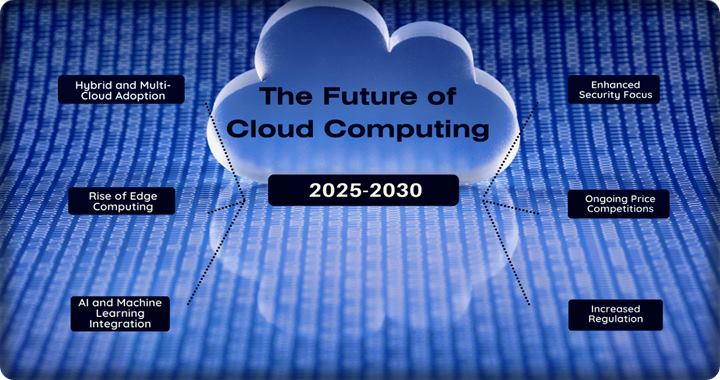
The Future of Cloud Computing
Cloud computing is expected to evolve further with emerging trends:
- Multi-Cloud Strategies: Organizations will increasingly adopt multiple cloud providers to reduce dependency and enhance resilience.
- Quantum Cloud Computing: Integration of quantum computing into cloud services will exponentially increase computational power.
- AI-Driven Cloud Management: AI will automate resource allocation, cost optimization, and security monitoring.
- Sustainability and Green Cloud: Providers will focus on energy-efficient data centers to reduce carbon footprints.
- Cloud for 5G and Edge Integration: 5G technology will enhance cloud performance and support real-time applications.
Cloud computing represents a paradigm shift in how technology services are delivered, consumed, and managed. It enables businesses and individuals to access vast computing resources on-demand, fostering innovation, scalability, and global collaboration. Despite challenges related to security, privacy, and vendor lock-in, its advantages far outweigh the drawbacks.
As organizations increasingly move toward digital transformation, cloud computing will remain a cornerstone of technological advancement. Its integration with AI, IoT, and big data will continue to redefine industries and improve efficiency. The future belongs to a hybrid, intelligent, and sustainable cloud ecosystem that empowers humanity to innovate beyond traditional boundaries.